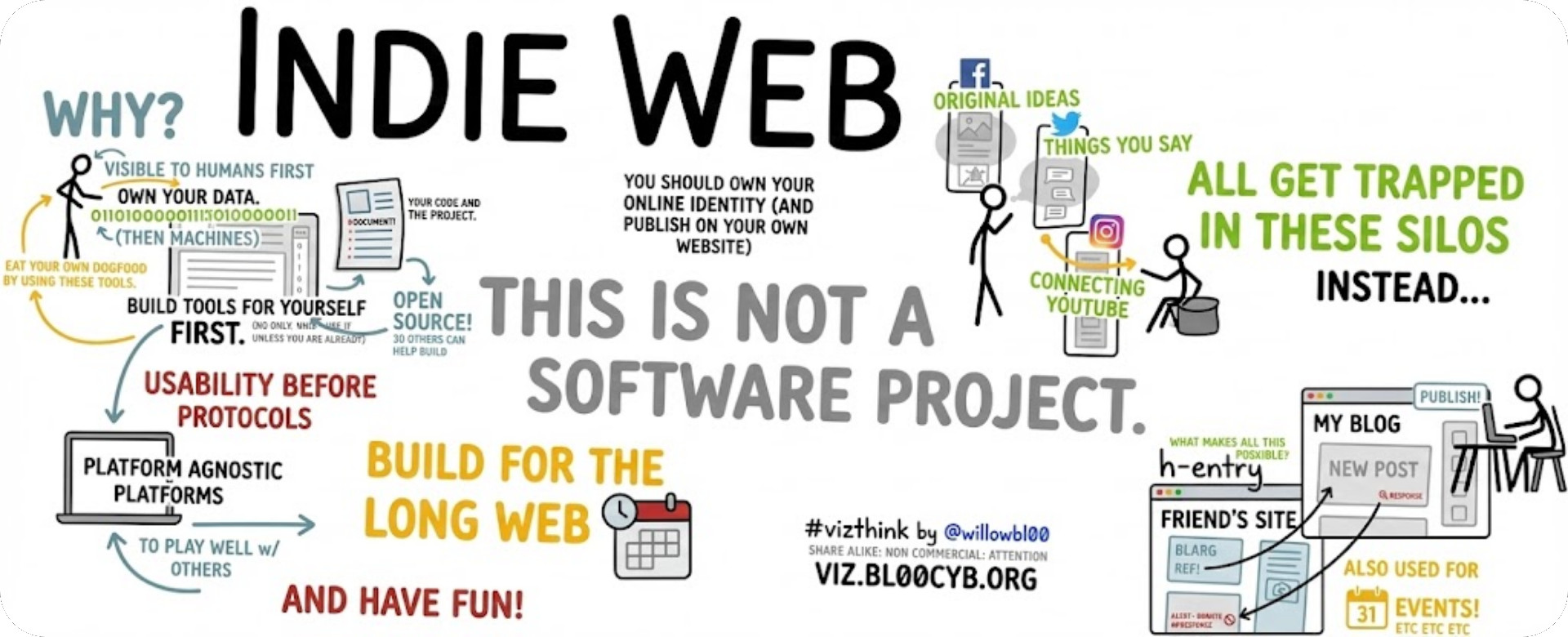
Last month, I wrote about omg.lol on my Medium blog, and something unexpected happened. The response was surprising! Thousands of reads and a dozen of comments, and dozens of people signing up with my referral, taking the leap into the independent web. People who had been lurking on the sidelines for years suddenly had their own corner of the Internet.
But with that excitement came questions. Where else should I look? What other tools exist? How do I find others like me?
This follow-up is for all of you who read that article and thought, “I’m ready for more.” Whether you’re a writer exhausted by algorithms dictating your reach, a creator wanting escape from the platform churn, or simply someone who remembers when the Internet felt fun, then this guide is your next step.
The State of Search (Why This Guide is Needed)
Before we dive into resources, we need to talk about why human curation matters more than ever.
Google search is collapsing. Between 2021 and 2025, websites experienced traffic losses exceeding 60% from organic search, with quality content creators punished while AI-generated spam flourished. Confirmed algorithm updates decreased from 10 annually in 2021-2022 to just 4 in 2025, yet volatility reached record-breaking levels.
By 2025, much of the web has been consolidated into walled gardens, polluted by generative AI producing near-infinite low-quality articles, and optimized to death by SEO tactics. For news publishers specifically, Google Web Search traffic declined from 51% to 27% between 2023 and 2025.
This is less about nostalgia than it is survival. Search engines fail and AI floods the void with slop. Human curation becomes essential infrastructure. We need directories. We need blogrolls. We need people pointing to other people.
Forget about using LLMs for research. This is about moving toward a more human, less sterilized, boring Internet. Let’s explore the tools that make that possible.
Part One: Sillyblogging with Pika
I’m going to focus this guide for Medium writers and readers, for those who care about the craft of writing. There’s a certain expectation when writing on Medium: you’re expected to be well-researched, or at the very least, provide value to an audience.
That’s important, obviously, but it can be detrimental to your writing if that’s the only kind of writing you’re doing. You end up obsessed with metrics, with what others are looking for you to write.
What you need is a playground. A sandbox. You might think your private notes or text documents count for this, but no, not really. You need to think in public, learn in public—and writing is one of the best ways to think and learn.
Liberate yourself and give self-permission to write whatever you want, blog about whatever you like, no matter how silly!
Maybe omg.lol is too technical or the cost doesn’t seem worth it (even though $20/year is still far cheaper than other options). That’s fine, because I found blogging platforms I enjoy even more than omg.lol that have free options.
The first is rather popular: Bear Blog, an ultra-minimalist blogging platform—very web 1.0. If you don’t mind having only text, then this option might be right for you.
 illustration of Barry Hess by Shawn Liu on the homepage of https://pika.page/
But if you’re looking for something a little more extensible and, in my opinion, fun, let me introduce you to pika.page, a platform created by Good Enough. Good Enough is a zine publisher and small web dev company that makes good small products. Here’s their full list:
- Pika: A pretty good blogging platform that makes blogging easy and beautiful. Hop in and start writing for yourself. Barry did. Why don’t you?
- Letterbird: A simple contact form on the web. Give people a great experience getting in touch with you, and stop giving out your personal email address.
- Tilde: A tilde server that provides a free shell account and web hosting for creative projects.
- Mataroa: A minimalist blog platform with built-in analytics and RSS.
Pika is what I’m most excited about. It’s designed for “sillyblogging”—the kind of casual, experimental writing that doesn’t need to be polished or perfect. The interface is clean, simple, and delightful to use.
Part Two: Search Engines That Care
Google may be failing, but alternatives are emerging. These search engines prioritize independent sites and human-curated content:
- DuckDuckGo - Privacy-focused search that doesn’t track you
- Mojeek - Independent search engine with its own index
- Searx - Meta-search engine that aggregates results from other engines
- Brave Search - Privacy-focused search with independent indexing
- Yep - Search engine that shares revenue with content creators
Part Three: Directories and Communities
Find other independent creators through these curated directories:
- IndieWeb Webring - Ring of IndieWeb sites
- Brutalist Websites - Directory of experimental web design
- Awwwards - Web design awards and directory
- SiteInspire - Curated gallery of web design
- One Page Love - Directory of single-page websites
- The Directory - Hand-picked directory of indie projects
Part Four: Publishing Tools
Beyond blogging platforms, these tools help you publish independently:
- Micro.blog - Microblogging platform with your own domain
- Write.as - Minimalist blogging platform
- Known - Social publishing platform
- Plume - Federated blogging platform
- WriteFreely - Clean, minimalist publishing platform
Part Five: Building and Hosting
For those who want to build their own sites:
- Neocities - Free web hosting with a creative community
- GitHub Pages - Free static site hosting
- GitLab Pages - Alternative to GitHub Pages
- Netlify - Powerful static site hosting
- Vercel - Modern web deployment platform
- Cloudflare Pages - Fast static site hosting
Part Six: Connecting with Others
The IndieWeb is about connection. Here’s how to find your people:
- IndieWebCamp - Community and events for independent web creators
- Homebrew Website Club - Regular meetups for IndieWeb creators
- Fediverse - Directory of federated social networks
- Mastodon - Decentralized social network
- Matrix - Open network for secure communication
Part Seven: Learning Resources
Get up to speed with these guides and tutorials:
- IndieWeb Principles - Core values of the IndieWeb
- A Beginner’s Guide to the IndieWeb - Step-by-step introduction
- The IndieWeb Wiki - Comprehensive documentation
- Web Standards - Learn modern web development
- MDN Web Docs - Comprehensive web development resources
Part Eight: Inspiration
See what others are building:
- Chris Aldrich - IndieWeb pioneer and educator
- Tantek Çelik - Web standards and IndieWeb leader
- Jeremy Keith - Web standards advocate
- Amy Hoy - Independent developer and writer
- Maggie Appleton - Digital garden and knowledge management
Getting Started
Ready to jump in? Here’s your action plan:
- Choose your platform - Start with something simple like Pika or Bear Blog
- Claim your domain - Get a personal domain name (Porkbun, Namecheap, etc.)
- Set up your site - Create your first post or page
- Join communities - Find webrings and directories to join
- Connect with others - Engage with the IndieWeb community
- Keep learning - Explore new tools and techniques
The Human Web
This isn’t about technology—it’s about human connection. The IndieWeb movement is about reclaiming our digital spaces, building communities that care about people over profits, and creating a web that serves human needs rather than corporate interests.
Every small site, every personal blog, every independent project contributes to a richer, more diverse web. When you build your own corner of the internet, you’re not just creating for yourself—you’re creating for everyone who values authentic human expression over algorithmic optimization.
The future of the web isn’t in the hands of Big Tech. It’s in our hands, one site at a time.
This guide will be updated regularly. Have suggestions? Let me know.